"Preserving our Past for the Future since 1973"
The Association & Museum of the 8th Canadian Hussars (Princess Louise's) Inc.
  • Association
    • Membership
    • Executive
    • Regiment
    • Sabretache
    • Planned Giving Program
    • Bursary
    • Funeral Support
    • Special Events
    • Association Donations
    • Gallery
    • Contact Us
  • Museum
    • History of the Regiment
    • Artifacts and Archives
    • Trench Exhibit
    • Contact Us >
      • Meet Our Team
      • Museum Donations
      • Volunteer Hours
      • Gallery
      • Summer Employment
  • Remembrance
    • Book of Remembrance
    • Lest we Forget Program
    • Faces to Graves
  • Blogs
  • Media
    • Videos
  • Gift Shop

Kennedy

3/26/2017

3 Comments

 
Keltie Samuel Kennedy 1262008

Canadian Expeditionary Force
Picture
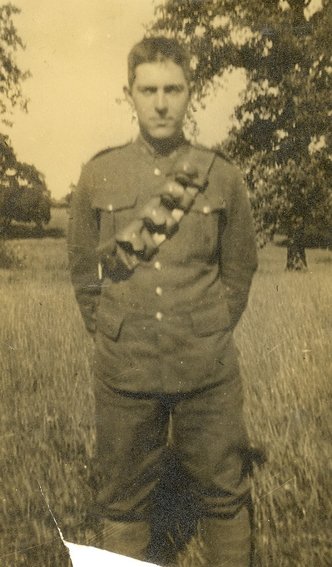
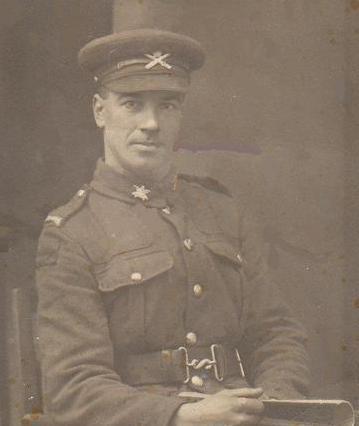
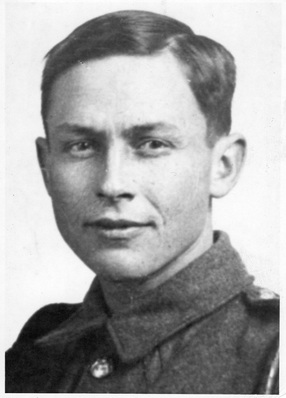
Keltie Samuel Kennedy was the son of William and Kate Kennedy. He was born on September 23, 1897 in Hampton, NB. As a young man, he attended the Church of England. On May 1, 1916, at the age of 18, Keltie signed up with the 7th Overseas Siege Battery later the 6th Canadian Siege Battery in Saint John, NB. He was 5 feet 10 inches tall and had blue eyes and light brown hair. He was initially stationed on Partridge Island where he did guard duty but in his free time he liked to play ball, tennis and cards. He left Canada on the SS Olympic in May, 1916. He noted in his diary that there was lots of music to entertain the troops as there were five bands aboard. He disembarked in Liverpool and was prepared to fight for King and Empire.

Kennedy served in France for nine months. His diary indicates that he was always happy to receive mail from home and also that he attended church services as often as possible. He fought at the Somme and upon his arrival at Vimy he was very impressed by the manpower and the artillery moving in to place in preparation for the big attack. In early April, 1917 Keltie writes of the challenges they faced as there was constant shelling, adverse weather conditions and damaged trenches requiring repairs. Keltie served with a Siege Battery. Their role was to fire heavy artillery rounds with the objective of destroying trenches, bunkers and barbed wire. On Easter Monday, April 9, Keltie was up and moving at 4:00 AM. He noted in his diary that by 7:25 AM there were large numbers of prisoners coming in and by 8:25 our troops were consolidating positions. He knew things were going well and that all of the advanced planning was paying off.  After April 12, the Canadians still had a lot of work to do chasing out pockets of Germans. Shelling from the enemy was a constant threat. On April 15, Keltie was struck on his back by a piece of shrapnel and a rock hit his head. He avoided serious injury this time.
Keltie was wounded for the second time in Arleux, France by a high explosive shell on April 28, 1917.  He was carried out under fire later that day. He sustained an injury to the bone in the left hip and also had a broken femur on his left leg. He became as noted in his medical records “dangerously ill” while in the hospital. The leg was seriously infected and as a result he was sent back to England. He was discharged in February, 1918 and was able to serve as a clerk. Sometime shortly after he married his wife Irene who had been his nurse during his convalescence in England.  The leg again became troublesome and he was readmitted to the hospital in Bramshott in April, 1918 for further medical treatment. He was sent home in June, 1918 where again he was admitted to the hospital in July and discharged on August 20, 1918. The left leg was now one and a half inches shorter than his right leg.

Kennedy returned to Hampton, NB but in the aftermath of the Treaty of Versailles he felt certain that another global conflict was inevitable. These inter- war years were tough ones as there was not much money for the military but Kennedy felt that Canadians had to be ready when the next war started. The 8th Hussars were based in Hampton and Kennedy wanted to keep the regiment ready for the future. He convinced men to volunteer and keep training. He organized a machine gun troop in Hampton with the idea of keeping the men interested and developing their skills.  From 1936 to 1939 he was the Lieutenant-Colonel of the 8th Hussars. Given the situation in Europe in the late 1930’s war was now imminent. It was under his leadership that the 8th Hussars converted from a mounted regiment to an armoured regiment. He was credited with ensuring the 8th Hussars were well prepared for service in the Second World War. During the Second World War, he served at District Headquarters and after the war he served again as Lieutenant-Governor of the Hussars. He would do so until 1948. Keltie was no doubt very proud of his son, Clifford who served in Italy and North west Europe during the Second World War.


Keltie Kennedy died in 1987 at the age of 88. He is celebrated among Hussars today as being the driving force which made the regiment such a formidable force during the Second World War.



CTV News
Picture
3 Comments

Thorne

3/26/2017

5 Comments

 
Ora Whitfield Thorne
Canadian Overseas Expeditionary Force
Service Number 742837
Picture
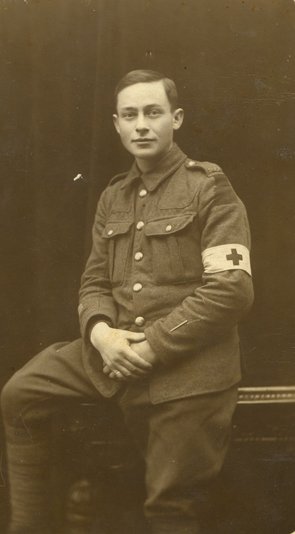
Ora Whitfield Thorne was born to Almeda (Kierstead) and Byatha Thorne on December 24, 1895 in Salem, Kings County, New Brunswick. He was one of 15 children (two girls and 13 boys). He was 18 years old and working on a farm when the First World War broke out. He did not join the military immediately as he feared he would be turned away because of some health issues.

Two years later the war that most thought would be over in a few months raged on. Ora was now 20 years old and he felt compelled to enlist and do his part. He enlisted on March 1, 1916. From March to May of 1916 he trained in Saint John, NB with the 115th Battalion. He then travelled to Quebec where he trained for the next few months in preparation for overseas service.

He was next sent to Halifax where he boarded the SS Olympic. He disembarked in the United Kingdom and trained in Bramshott where he received rifle and machine gun training. He was sent to Le Havre, France in 1917 where he was taken on strength by the 26th Battalion and worked behind the lines at Vimy ensuring that food, ammunition and supplies reached the soldiers.

Thorne became a stretcher bearer while with the 26th. He continued in this role until the end of the war. Thorne would go on to see action at the battle for Hill 70 in August of 1917 and at Passchendaele in the fall of 1917. He was wounded in November of 1917 when a shell struck the ground in front of him. Ora fell in to a hole and didn’t realize he had been wounded until he got up and felt blood. He recovered in the hospital for a two-week period.  Ora would go on to serve at the Battles of Amiens and Canal Du Nord in 1918, two significant battles from Canada’s Hundred Days. The First World War was declared over in November of 1918.

After the armistice, Ora went to Cologne, France for several months where he did guard duty. Before returning home, Ora was one of a few of the 26th Battalion chosen to parade before King George V in London. Ora was sent home with thousands of other Canadian servicemen in the spring of 1919. He disembarked in Halifax, took a train to Saint John from where he was discharged.  Ora returned to Havelock where the community had a small celebration to honour he and two others.

In 1925, Ora married Annie Marcia Thorne, daughter of Charles and May (Mullet) Thorne of the Canaan Road. Ora would go on to farm but when the Second World War broke out he felt compelled to enlist again but was refused. He did contribute however by helping with the construction of additional facilities at Camp Sussex. He then went on to work at Blois Corey’s mill. In 1945, Ora purchased a farm from Dan Burgess where he worked until retirement. He and his wife had two sons, Gerald and Ronny and two daughters, Norma (Mrs. Percy Corey) and Marilyn (Mrs. Dave Delong). Ora and his wife Anne had 22 grandchildren and 13 great grandchildren.
 
From biographical information held by the 8th Hussars Museum located in Sussex, NB. The museum has in its collection two essays. One essay was authored by John Hughes who interviewed Ora Thorne in December, 1983. The other essay was written by Ora Thorne’s daughter, Norma Thorne Corey.


Global News
Picture
5 Comments

Ashe

3/26/2017

4 Comments

 
Private John Firman Ashe 710173

26th Battalion

2nd Canadian Division
Canadian Expeditionary Force
Picture
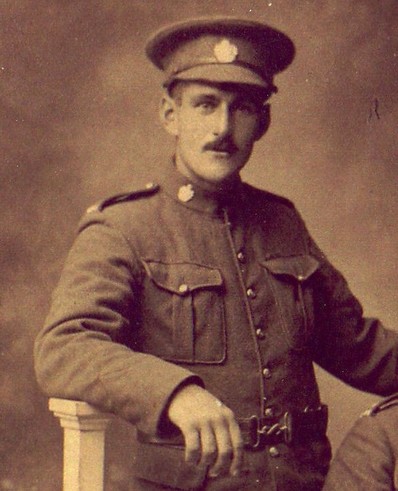
  • John Firman Ashe was born to a Presbyterian family in Upham, NB on January 25, 1891. He was the son of Robert and Emma Ashe. He enlisted in April 25, 1916 in Sussex, NB a little more than a month after his good friend Harry Myles had enlisted. He was 25 years old and in his attestation papers he declared himself to be a labourer and that he had eight weeks of experience with the local militia. He had blue eyes, black hair and he was 5 feet 9 ½ inches tall.
  • John was initially with the 104th Battalion as was Harry. They both left Canada on June 28, 1916 on the SS Olympic and disembarked in Liverpool, England together on July 6, 1916 where they trained at Camp Witley. He was transferred to the 26th Battalion on November 28, 1916 upon arriving in France.
  • The 26th Battalion was with the 2nd Canadian Division which played a significant role at Vimy Ridge in April, 1917. April 9th was the opening day of the four-day battle. The 2nd Division had great success on this day. They captured and retained all of its objectives. The 26th Battalion was working with the 24th. They took their sector and support line in 12 minutes and captured the Black Line between 6:02 and 6:14. The 26th pushed through in adverse conditions as the weather went from rain to snow to rain again. At some point during this day, John Firman Ashe was wounded and was taken to the No. 1 Canadian Field Ambulance where he died shortly thereafter. His military file indicated that the nature of the wounds was not reported. He died on the first day of battle to take the ridge. He was only 26 years old. Undoubtedly, this was a sad day for his friend, Harry Myles, who had to fight on with a heavy heart.
  • John Ashe is buried at the Quatre-Vents Military Cemetery located in Estree-Cauchy, France 16 kilometers north-west of Arras. There are over 100 casualties from the First World War buried there. His family were obviously heartbroken. They paid to have the original wooden cross from his burial site brought home. This cross has been brought out of storage countless times over the last 100 years so that generations of his family could learn of his life and of his sacrifice. The cross along with other personal memorabilia were recently donated to the Canadian War Museum in Ottawa. The house where these two young men spent part of their youth is still standing. John’s parent’ s headstone bears his name as well along with the inscription “Killed at Vimy”. John’s family very much treasures his memory.

CTV Atlantic
Picture
4 Comments

Myles

3/26/2017

3 Comments

 
Private Harry Jones Myles 710128
5th Canadian Mounted Rifles
3rd Canadian Division
Canadian Expeditionary Force
Picture
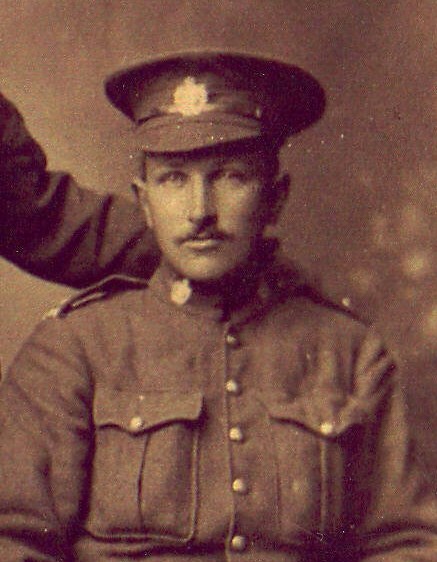
Harry Jones Myles was born in Hammond, Kings County on December 6, 1888. He was the son of Martha and Weldon F. Myles and the family attended the Church of England. Harry enlisted on March 20, 1916 at the age of 27 years old. He was single and stated in his attestation papers that he was a clerk. He had no previous military experience. He had a fair complexion, brown hair and was 5 feet 6 ¾ inches tall.
.
Harry joined the 104th Overseas Battalion (B Company). He set sail with his friend from the Shepley Road, John Ashe, on June 28, 1916 on the SS Olympic and they arrived
together in Liverpool, England on July 6, 1916. He trained with John at Camp Witley while in the UK. He was sent to France on November 7, 1916 and was taken on strength by the 5th Canadian Mounted Rifles on December 16, 1916.
In 1917, it was decided that the Canadian Corps would have the responsibility of taking Vimy Ridge. Our four Canadian Divisions would each have distinct responsibilities in this well planned and well rehearsed attack. The 5th CMR was part of the 3rd Division and their war diary indicates an active role in this significant battle. The 5th CMR suffered 91 casualties of which 20 died as a result of the battle. After the battle between April 13th and April 20th, the 5th CMR continued moving forward in adverse conditions as weather and constant shelling affected greatly their advance. On April 20th, patrols were sent forward to determine enemy positions. It was reported in the 5th CMR War Diary on this date that enemy artillery was very active around Bois de la Chaudière which barraged the 5th CMR’s front line heavily between 10:00 and 11:00 PM. At some point on April 20, Harry Myles was killed, eight days after the great Canadian success at Vimy. According to the war diary of the battalion, Harry was one of two 5th CMR’s killed between April 17 and April 23, 1917.

Harry is buried in Cabaret-Rouge British Cemetery which is located 3.5 kilometers north of Arras in Souchez, France. There are 7655 Commonwealth burials from the First World War in this cemetery. Harry Myles is the only soldier from the 5th Canadian Mounted Rifles buried at Cabaret-Rouge. He was only 29 years old when he died.

Two men, Harry Myles and John Ashe, both born and raised here in Kings County, NB, friends for many years,  went to war together, both fought at Vimy and both died in April of 1917. The news surely reverberated deeply with their families and saddened their community. Both men paid the ultimate sacrifice in the name of freedom. Lest we forget.


CTV Atlantic
Picture
3 Comments

Maillet

3/26/2017

5 Comments


Private Edouard Reuben Maillet 666334
Canadian Expeditionary Force

Picture
Edouard Reuben Maillet was born in Ricibucto- Village in Kent County, NB on January 14, 1890. His father was Reuben S. Maillet and his step-mother was Victoria Maillet. The war that was supposed to be over at Christmas was now in its second year. Maillet felt he had to contribute. He enlisted at the age of 26 in March of 1916 in Moncton, NB. Prior to joining the military he was a labourer. Upon enlistment, he was with placed with the 165th Battalion and later taken on strength by the 4th Pioneer Battalion. His medical records from 1916 indicate that he was 5’ 8” tall and weighed 140 pounds. He had a medium complexion, dark hair and blue eyes. His medical record also noted that he had a contusion to an abdominal wall as the result of an injury sustained in 1912 while in the United States. The file indicates that the injury was the result of lifting a heavy object. Edouard stated during his examination that he aggravated the same area in 1913. This hernia would cause further troubles for Edouard during his military career in Europe.

Edouard served his country for 3 years and 42 days. After training in Canada from March to September, 1916 he then proceeded to England on the SS Metagana. He disembarked in Liverpool on September 22, 1916. He was taken on strength by the 5th Canadian Pioneer Battalion at Crowborough on December 2, 1916. Crowborough had a Canadian Machine Gun Training School which opened during the second half of the First World War. On January 14, 1917, he was sent to France to face battle for the first time. He was taken on strength by the 3rd Canadian Pioneer Battalion. A pioneer battalion worked in conjunction with the engineers. They helped to consolidate positions captured by the infantry. They were also involved with tunneling, mining, wiring, railroad work, and building and maintaining trenches. This battalion played a vital role in the preparation work prior to the April 9th attack on Vimy Ridge and over the course of the four day battle.
Edouard was transferred to the 29th Battalion on May 8, 1917. The hernia which had troubled him for several years was again aggravated as his medical records indicate that he was hit in this spot with a lump of earth while fighting in France in 1917.
On April 30, 1918 Edouard was struck off strength to the 2nd Battalion Canadian Machine Gun Corps. Maillet would fight through until the end of the war. On April 13, 1919, he returned to England and left for Canada on May 14, 1919. He was discharged on May 25, 1919 in Toronto at the age of 29. He returned to Richibucto- Village where he fished for a few years and then took care of the Richibucto Harbour Lights. He retired in 1951 to take care of his wife, Emma, who was ill. Edouard and Emma had 2 sons and 5 daughters.
Edouard died at the age of 74 on February 18, 1964 at Hotel Dieu Hospital in Moncton. He had served his country well and his family is proud of his contribution to the military.


Interview
Picture
5 Comments

Bowser

3/21/2017

46 Comments

 
Edward Murray Bowser 832785
Canadian Expeditionary Force

Picture
Murray Bowser was born on March 31, 1886 in Dorchester, NB, the son of Edward and Margaret Bowser. Murray’s life was marked by a fair bit of tragedy and misfortune. As a child, Murray fell off a house and injured both scapulas which caused him some challenges during his military service. His father drowned in the Tantramar River in Sackville, NB in 1894. The family then relocated to Amherst, NS where Murray eventually found work in a local foundry. Here at the age of 13 he accidentally cut off three fingers of his left hand with a buzz plane. Murray’s mother remarried at the age of 44 to a Cornelius Crowley who was 33 years her senior. Unfortunately, Murray’s mother died shortly thereafter and Cornelius planned to put the children in an orphanage. Happily, his mothers brother, Murray’s uncle, William Union, who lived in Moncton took the children. Murray found work there with the Intercolonial Railway as a moulder.
In 1905, at the age of 19 Murray married Mabel Morrill. On August 8, 1916, Murray enlisted in Val Cartier, Quebec with the 145th Battalion. He was 30 years old. He had previous military experience as he had served with the 74th Regiment for nine years as a cook. He arrived overseas on the SS Tuscania on October 6, 1916. He served overseas with the 9th Reserve Battalion at Bramshott and with the 10th Battalion at Vimy Ridge. The 10th Battalion was part of the First Canadian Division at Vimy. On April 9th, they advanced into heavy small arms fire over heavily shelled terrain. The 10th Battalion suffered most of its casualties in the first 15minutes of the battle on April 9. Murray would survive Vimy but he was a victim of shell shock.
He returned home to Canada on the HMTS Justicia in May of 1917 and was taken on strength by the # 6 Special Service Company in July, 1917. On December 6, 1917 Murray would be present at the worst maritime disaster in Canadian history: the Halifax Explosion. On this day, Private Bowser was among a group of soldiers sent down to the wharf to unload ammunition. They witnessed the Mont Blanc on fire. There were two explosions. The first one did not affect Murray but the second one knocked him out. He remembers regaining consciousness on Barrington Street and being transported to the Camp Hill Hospital. Canadians gained a new perspective of the reality of war with over 2000 dead, 9000 injured and 25,000 left homeless.

Murray was discharged from the army on October 18, 1918. He returned to Moncton and worked for CN as a moulder. In 1925, he married Edna Boudreau. In 1939, he built a house. Disaster struck again as the house burnt down as the result of a grass fire. He lost everything including his First World War uniform. He built his second home on Edinburgh Drive, Moncton. Murray would go on to retire from CN. He was a proud member of the CNR War Vets and the 145th Battalion Association. He had looked adversity in the face countless times but soldiered on to live a full, productive life. He died on October 24, 1974 and is buried at Fair Haven Memorial Gardens on the Salisbury Road in Moncton.


CTV News
Picture
46 Comments

Main

3/18/2017

5 Comments

 
Captain Charles Gilliland Main
Canadian Army Medical Corps
Picture
Charles Gilliland Main was born in St. Andrews, NB on January 2, 1865. He was a physician in Edmundston for a number of years where he was the first doctor in New Brunswick to do an appendectomy. It was not long after he moved to St. Stephen, NB to practice that he felt compelled to enlist. He traveled to Montreal and on April 19, 1916 at the age of 51 he enlisted wanting to do his part to help with the heavy casualties. His military file indicated that he was married to Caroline Matilda and they had one child, Wilmot Balloch Main . They belonged to the Church of England. Both his parents were deceased.

He was appointed to the rank of Captain on March 2, 1916 and joined the Army Medical Corps. He served in England and France. On May 9, 1916, he arrived in Boulogne, France and was stationed at the No. 3 General Hospital. He was attached for temporary duty to the No 13 British Station Hospital during the summer of 1916 and then returned to the No. 3 General Hospital. Main dealt with casualties from many battles during the First World War including those at Vimy Ridge. There were more than 10,500 casualties over the four-day battle. 7,707 of those occurred on April 9 and the early hours of April 10. The wounds that medical staff dealt with were more severe than previous battles due to the increased use of artillery. Charles’ son, Wilmot enlisted in August of 1917. He too joined the Medical Corps and served with his father in Europe. Charles had a very caring heart. He wrote numerous articles for the newspaper detailing his experiences in France as well as those of the soldiers. He was also an amateur photographer. During the war, he took hundreds of photos of life during war time focusing on family, the injured, special times and the dead. His pictures have been preserved by the family and have now been donated to the 8th Hussars Museum.
Charles Main was having some medical issues with ulcers and stomach ailments and was admitted to the hospital for a month in March, 1919. He set sail for Canada on August 13, 1919 and was discharged from service on November 18, 1919. Main returned to New Brunswick and established a long-term family practice on the corner of Charlotte and Watson Streets in the west side of Saint John. His son, Wilmot, would also come to Saint John to teach at Saint John Vocational School. Wilmot would go on to become Vocational’s second director from 1937-1965.

Dr. Charles Gilliland Main died at the age of 75 on September 7. 1940. He is buried in Fernhill Cemetery in Saint John. He was of great service to his country during the First World War and was fortunate enough to return home and help so many others through his medical practice.
His family is very proud of Charles and Wilmot for their contributions to the war as well as their many accomplishments during their lifetimes.

Interview
Picture
5 Comments

Fall 2016 Newsletter

2/27/2017

7 Comments

 
7 Comments

Harold Gamblin Chapter,

12/4/2016

6 Comments

 
Picture


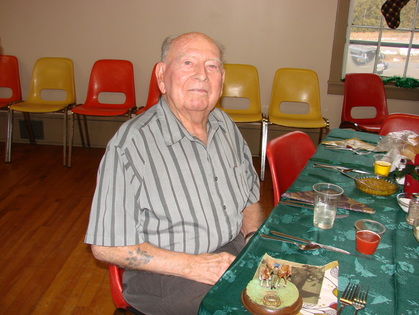
The 8th Hussars Christmas Dinner sponsored by the Harold Gamblin Chapter, Hampton N.B. was held at the Masonic Hall yesterday 03 December 2016 starting with a meet and greet at 12:00 noon and followed by a beautiful roast beef dinner.


Picture
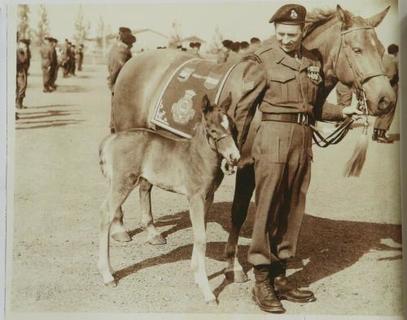
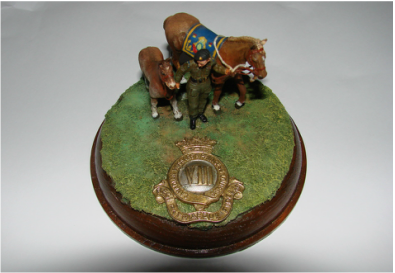
The Harold Gamblin Chapter has held a Christmas Dinner for more then 50 years starting with a group of Hampton veterans getting together and preparing the meal themselves, now the Masonic's prepare the dinner . This year there was a special presentation  made to the 8th Hussars Museum. Nick Dunning from Quispamsis, previously a 8th Hussars created a scene with Gordon Bickerton , Princess Louise and Princess Louise 2  the Mascots of the 8th Hussars. Gordon and Mary took great pride in looking after the horses. A full story about A Horse , Hope and Humanity, Remembering- Adopted mascot returned to N.B. with 8th Hussars Regiment can be found online - http://www.rootsweb.ancestry.com/~nbpennfi/penn8a2NewspaperStories_PrincessLouise.htm

Picture
Sgt. Gordon Bickerton holds Princess Louise and her 10-day baby Princess Louise II, at Camp Sussex in 1954.
The inspiration for the scene came from this photograph
Picture
 This scene will be on display at the 8th Hussars Museum to Honor the wonderful work of Nick Dunning and also honor the Mascots and their handler Gordon Bickerton .

    Another scene donated to the 8th Hussars Museum by  Nick Dunning tells the story of a Canadian soldier given a medal by a German. This diorama was  is on display now. More information can be found by clicking the link. http://www.8chassociation.com/blog---museum/diorama
Picture

Friends had the opportunity to socialize and reminisce about their family members and friends whom were with the 8th Hussars past and present.
Picture
6 Comments

Scovil Brown 

11/23/2016

5 Comments


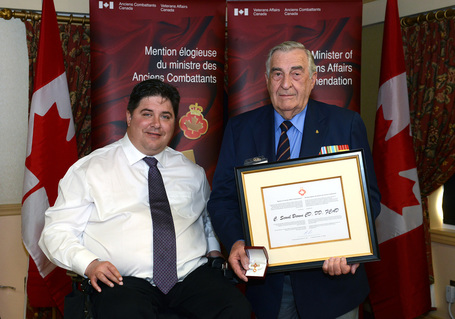
                                Minister of Veterans Affairs Commendation  

Since serving in uniform, many of Canada’s Veterans continue to provide outstanding service to their country, their communities and their fellow Veterans. To formally recognize the contributions of these outstanding Canadians, the Governor General authorized the creation of the Minister of Veterans Affairs Commendation.


Picture
The Commendation is awarded annually to individuals who have contributed in an exemplary manner to the care and well-being of Veterans or to the remembrance of the contributions, sacrifices and achievements of Veterans.

Hampton,New Brunswick -
Mr. Carl Scovil Brown is a Veteran of the Canadian Armed Forces. Originally a member of the 8th Canadian Hussars, he became a member of the regimental association upon his retirement and continues his involvement today. Mr. Brown ensures that sick members are visited, that families of deceased members are cared for, and that Veterans receive dignified funerals. He is also personally responsible for the establishment of the 8th Canadian Hussars Museum in Sussex, New Brunswick. Upon realizing that nothing existed to commemorate the contributions of the regiment, Mr. Brown developed a plan, recruited like-minded individuals, established committees and worked to create a museum. This involved countless hours gathering; cataloguing and insuring memorabilia; and directing fundraising efforts to acquire a venue to display the regimental history. Thanks to his efforts, the 8th Canadian Hussars Museum is now well established and was recently named the best small museum in Canada. Mr. Brown also convinced the association to fund a memorial tablet depicting the story of “the little colt” Princess Louise, that became the regimental mascot. Mr. Brown is also a long time member of the Royal Canadian Legion and sat on the board that replaced the old and crumbling cenotaph in Hampton, New Brunswick. This project required significant community engagement, fundraising and dedication. Mr. Brown’s financial expertise has been a huge asset to the Legion, helping them achieve the stability they continue to enjoy today.

www.veterans.gc.ca/eng/about-us/department-officials/minister/commendation/bio/1414
5 Comments

John Burpee Wallace

11/2/2016

3 Comments

 
3 Comments

War Brides Part 2

7/27/2016

3 Comments


War Bride Story of Great Grandmother Ivy Allaby

Picture
Many stories of war brides have circulated around the 8th Hussars Museum as many of the veterans have war
brides or many of the visitors have family members who are war brides.
 
An interesting story by Miranda Morrison, one of our summer students.

"My great grandfather Lloyd Allaby enlisted illegally with the 8th Hussars at the age of 14 so when he arrived in Aldershot and married my great grandmother Ivy Allaby, he was only 16 at the time while she was 14. After they were married, my great grandfather sent her across the Atlantic, back to Canada and while she was on the boat, she heard the news of the war ending. However, it was months later before her husband  returned."
 
 "As many other war brides were, she was promised to come back to a big beautiful house with lots of land, money, plumbing, electricity, and many other exciting things, but this was not the case. Instead, she came back to her husbands parent's shack in the middle of the woods with an outhouse out back. She was young, alone and scared. Everything was new and strange to her, a far cry from her being a field hockey goalie in England. She herself told me of this just a few years ago. She said that my great grandfather's mother and sisters would say that she wasn't good enough and that she was just garbage so she would go behind the house everyday and cry," said Miranda.


"After my great grandfather returned to Canada, life changed for my Great Grammy in a positive way. He purchased their own home and they farmed. Happier days were ahead as the young couple grew their family of 5 kids and spent many hours on their farm. One of Great Grampy's daughters Suzanne married  , Eddie Mercer,  my grandfather, whom died at a young age. 
Grampy Eddie was  known as, "the Meat Man" in Hampton.  Great Grammy spent many hours working in the gardens and raising her children. She did not travel much , nor return to England . She is currently living at the nursing home in Hampton and is turning 91 in October."


3 Comments

War Brides Part 1

7/27/2016

2 Comments


World War II War Brides

A war bride is a woman who marries a man that is active in serving their country during the time
of marriage. In most cases, war brides were married during World War II. The reason why many European women became war brides (almost all of them being British) is due in part to Canada being among the first countries to assist Britain ("Canadian War Brides", 1999). Just 43 days after the war started, the first marriage took place between a Canadian soldier and a British woman in the Aldershot area ("Canadian War Brides", 1999).

If you would like to check to see if you have a family member that was at one time a war bride, you can check at: http://www.findmypast.com/ 


Picture


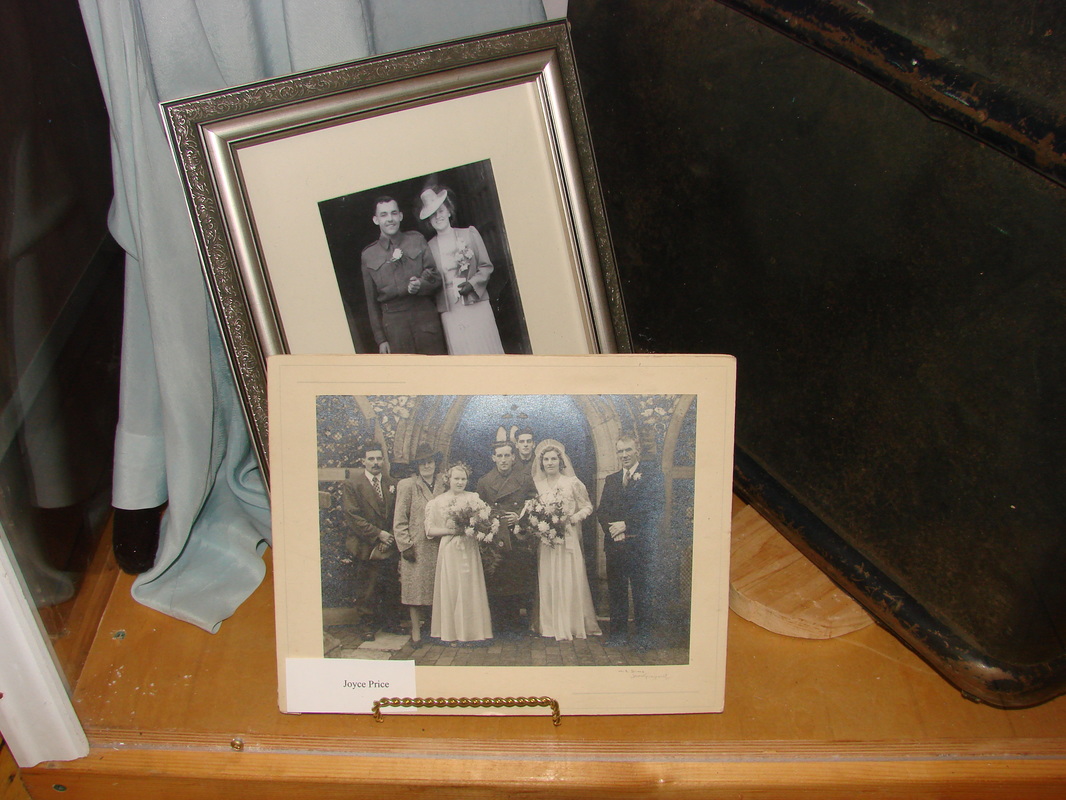
Top left photograph: photographs of War Brides with Canadian Soldiers on their wedding days in World War II. On display at the 8th Hussars Museum.


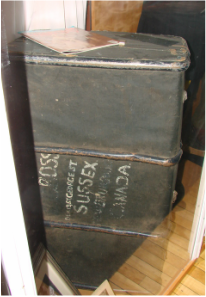
Photograph to the right: This footlocker belonged to Rick Lockhart's  grandmother,
Catherine Eva Ross. She was married to Rick's grandfather, John and came to Canada with Ricks Mom in tow. She had been born in England.

Picture
Picture


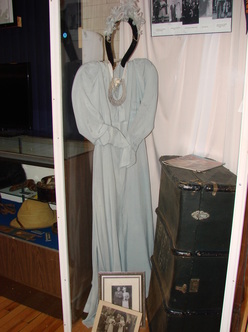
Most war brides were young but optimistic. Money was tight during war times, so people like Ruby Gray got creative. Ruby Gray is a war bride that resides in Sussex, New Brunswick. Her dress is displayed at the museum in the war bride case and the dress itself has an interesting story behind it.

Ruby created a dress out of a parachute. As stated, money was tight so women would use any material they could to create their own wedding dresses. One night, a German mine landed and the area was quartered off. Ruby snuck in late at night and stole the German parachute which she sewed into a dress. The dress comes with a horseshoe necklace that says "good luck" on it. 

Many war brides are still alive today to tell their own stories. If you happen to know a war bride with an interesting story to tell, stop into the museum. All stories are welcome!


2 Comments

Tim Ellis

7/6/2016

5 Comments

 
Picture
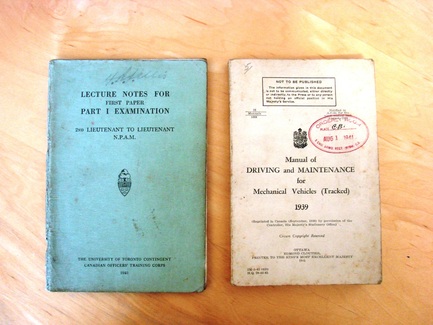
                                          Training Manuals Used by Tim Ellis

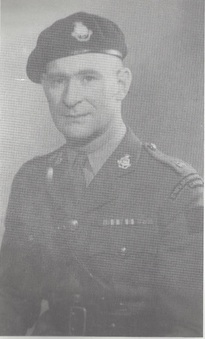
Harold Robertson Scarff (Tim) Ellis was born on April 18th, 1916. He joined the 8th New Brunswick Hussars in 1940, going on to serve for the entirety of the Second World War.
In July 1941, Tim Ellis came to Camp Sussex for training. In time, he was eventually deployed with the Regiment in the Italian Campaign and was promoted to Major in command of "B" Squadron before the battle at Coriano Ridge.

Ellis proved to be a successful commander, whose tactical skill and initiative earned him the Distinguished Service Order, which was awarded to him on September 14th, 1944.

After the war, Tim was Honorary Lt.-Col of the Regiment from 1992-1995; he died May 10th, 2011.

As an Officer in the Canadian Army, Ellis was required to enroll in the Canadian Officers' Training Corps. Ellis personally completed his initial training at the University of Toronto. Cadets completed various courses in a variety of fields depending on their branch of the Armed Forces. As Ellis was in the 8th Hussars, much of his training involved driving and maintenance of mechanical vehicles, both tracked and wheeled.

Other courses included Principles of Instruction, Elementary Military Law, Field Service Regulations, and Basic Military Tactics.

Once deployed, however, training did not stop, and officers were expected to keep up with new developments in warfare, and acquire new skills.

In his book, This Hussar Remembers, Ellis recounts one lecture given by a British officer in a tank instructors course. "One of our instructors, an expert on carburetion, was a Captain (who must remain nameless) from one of the old English Cavalry Regiments gone Armoured and was a source of much banter within our group. Middle aged, always immaculately turned out in shining leather and gleaming brass, strolling about in a cloud of aftershave, he had the florid complexion and watery eyes which made up what the English called an "expensive face" and this topped off with a forage cap pushed wall-back on his head, the visor angled heavenward."

At the 8th Hussars Museum, we are fortunate to have acquired many of the training texts Ellis used during his time in the 8th Hussars. They provide valuable insight into his time as an officer.

Picture
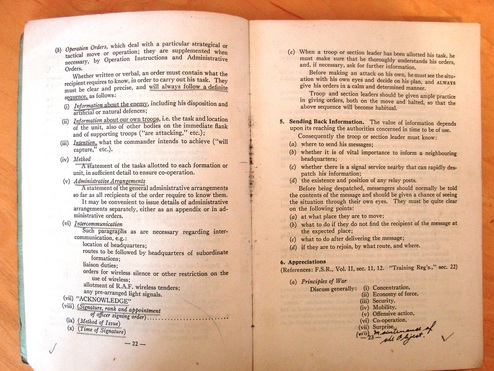
Titled: "Lecture Notes for First Paper Part I Examination, 2nd Lieutenant to Lieutenant" this book contained a wealth of knowledge about day-to-day operations and duties of members of the Canadian Army. It is likely Ellis would have had to memorize a great deal of these notes for an examination.


Picture


Along with the lecture notes, Ellis would have been required to have been familiar with the maintenance of tanks and other tracked vehicles used by the 8th Hussars.


Picture

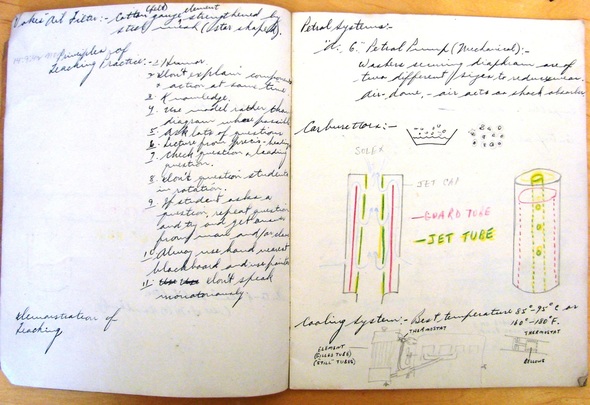
Titled "Exercise Book" Ellis used this to record notes while on an instructors course in Bovington in 1942, The book contains numerous hand written notes and hand drawn diagrams.


Picture


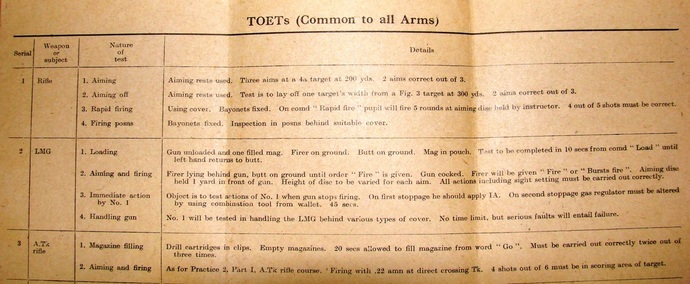
A booklet from the War Office outlining basic standards required to be met by British and Commonwealth soldiers in 1943. Infantrymen were required to hit 2/3 targets with a rifle at 200 yards, machine gunners were expected to perform a reload drill in ten seconds, and the infantrymen was expected to run a mile in 5 minutes 30 seconds or less to achieve full marks. A grade of 84% on the test was considered "Special" whilst 48% was "Standard."


5 Comments

June 2016 Newsletter

7/3/2016

4 Comments

 
4 Comments

Ora Thorne

6/28/2016

2 Comments

 
Picture
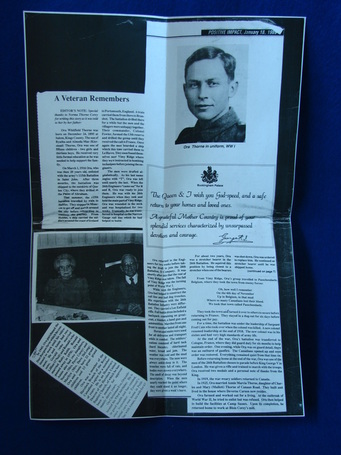
A Veteran Remembers - This Story was written by Ora Thorne's daughter Norma Thorne Corey. (posted in Positive Impact January 18th, 1989)
 
    Ora Whitfield Thorne was born on December 24, 1895 at Salem, Kings County. The son of Byatha and Almeda Mae Thorne., Ora was one of fifteen children-two girls and thirteen boys. He received very little formal education as he was needed to help support the family.
     On March 1,1916 Ora, who was then 20 years old, enlisted with the army's 115th Battalion in Saint John. After three months, the battalion was shipped to the outskirts of Quebec City , where they drilled on the Plains of Abraham.

     That summer, the 115th battalion traveled by train to Halifax. They stopped in Moncton to get off and march around the city before re-boarding  to continue the journey. From Halifax, a ship carried the soldiers around the coast of Ireland to Portsmouth, England. A train carried them from there to Branshot. The battalion drilled there for awhile but the men and the villagers were unhappy together. Their commander, Colonel Fowler, formed the 13th reserve and drilled the group until they received the call to France. Once again the men boarded a ship, which this time carried them to LeHavre. They soon found themselves near Vimy Ridge where they were instructed in bombing techniques before joining the engineers.
     The men were drafted alphabetically. As his last name begins with a "T", Ora was left until nearly the last. When the 26th Engineers "came out" for R and R, Ora was ready to join them. He was with the 26th Engineers when they took and held the main part of Vimy Ridge. Ora was wounded in the neck and was hospitalized for two weeks. Ironically , he was transferred to hospital on the Narrow Gauge rail line which he help build.
      Ora returned to England for two weeks before taking the draft to join the 26th Battalion , D Company. It was shortly after this that the rest of Vimy Ridge was taken. The fall of Vimy Ridge was the turning point for World War I.
    While with the Engineers, Ora had helped construct the rail line and had dug trenches. His experiences with the 26th Battalion Infantry were different. They carried the Lee Enfield rifle. A full battle dress included a backpack containing a great coat, a blanket, a hand gun and ammunition. Marches from one front to another lasted all night.


Picture
    Horses and Mules were used for all deliveries and transport while in combat. The soldiers rations consisted of hard tack (hard biscuits) chlorinated water, bread and jam. The weather was cold and the mud was everywhere. The men were always ankle deep in it. The trenches were full of rats, and bodies were strewn everywhere. The smell of decay was beyond description. When the men nearly reached the point where they could stand it no longer, they were given a week's leave.
     For about two years ,Ora was a stretcher bearer in the 26th Battalion. He acquired this position by being the closest to a stretcher when one of the bearers was shot down. Ora was ordered to replace him. he continued stretcher bearer until he was shipped home.
     From Vimy Ridge, Ora's group travelled to Passchendaele, Belgium, where they took the town from enemy forces: "Oh, how I remember on the 6th day of November Up in Belgium, in that mud, where so many Canadians lost their blood. We took that town called  Passchendaele.
   They took the town and turned it over to others to secure before returning to France. They stayed in a dug-out for six days before coming out for pay.


Picture

    For a time, the battalion was under the leadership of Sarge Fred Cain who took over after the colonel was killed. A new colonel resumed leadership at the end of 1918. The new colonel was in his sixties and had very high standards of army life.
At the end of the war, Ora's battalion was transferred to Cologne, France, where he did guard duty for six months to help maintain order. One evening , while Ora was on guard detail there was an outburst of gunfire. The Canadians opened up and restored order. Everything remained quiet from that time on .


Picture
Before returning to Canada at the end of the war, Ora was one of the men of the 26th battalion chosen to parade before King George V in London. He was given a rifle and trained to march with the troops . Ora received 2 medals and a personal note of thanks from the King. In 1919, the war-weary soldiers returned to Canada. 
     In 1925, Ora married Annie Marcia Thorne, daughter of Charles and Mary Thorne of Canaan Road. They built and lived in the house where Deverne Carson now resides.
     Ora farmed and worked out for a living. At the outbreak of World War II, he tried to enlist but was refused. Ora then helped to build the facilities at Camp Sussex. Upon it's completion , he returned home to work at Bloise Corey's Mill.

Picture
    In 1945 , Ora purchased the Dan Burgess farm which he continued to work until his retirement. He and Annie had 2 sons, Gerald (who married Lillian O'Neil and Ronald (who marred Ruby Keith). Ronald passed away in 1970. They also had two daughters Norma and Marilyn. Ora and Annie have 22 grand children and 13 great grand children.
    Ora was a member of the Havelock branch Royal Canadian legion for a number of years. He is an Honourary Deacon of the Havelock United Baptist Church, of which he has been a member for approximately thirty years.


2 Comments

Blooming Ceremony

5/18/2016

4 Comments

 
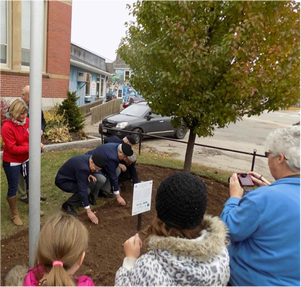
May 18th 2016 Mrs. Dunfield and her grade 4 class, Members of Communities in Bloom Sussex  and 8th Hussars Museum gathered at the Dutch Canadian Friendship Garden that we planted  last fall at Town Hall to take photographs. The tulip bulbs were provided by Vesey's.

In 2015 The Town of Sussex was honored to have been selected through an application from Communities in Bloom to help celebrate  the 70th anniversary of the Liberation of The Netherlands.
As Canada’s major importer of Dutch Bulbs, Vesey’s recognized that a celebration of the very special 70th anniversary ending WW2 was incredibly important and should not pass by without their involvement.


Since Vesey’s customers are spread across the entire nation, the company wanted to make this a truly Canadian Gift. To accomplish this goal, they made available 140 tulip gardens, each containing 700 red & white tulips, to various communities across Canada.

To complete the obligation to Vesey's below are photographs of the gardens today, Beautiful !!  We  are very Proud of the Gardens.


4 Comments

Diorama

5/3/2016

53 Comments


A WARTIME LEGEND

The experiences of people in war produce many stories. Some of them are true; some of them could be.

 This scene built by  Nick Dunning of Quispamsis tells the story of a Canadian soldier given a medal by a German. This diorama was donated to the 8th Hussars Museum and is on display .
 
After a battle between Canadian and German units, the German felt the Canadian had gone beyond what was necessary in caring for wounded Germans and wanted to reward him. He removed an Iron Cross (a high German decoration) from his own uniform and presented it to the Canadian in thanks.

Slideshow photos by Don Robinson and they are awesome

53 Comments

168th Birthday

4/17/2016

2 Comments

 
Picture
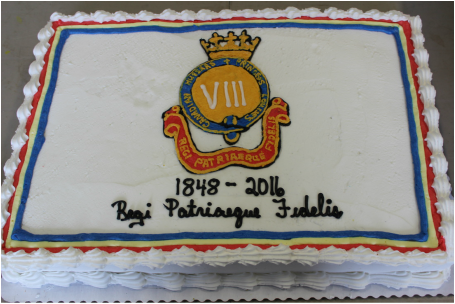
Happy 168th Birthday 8th Canadian Hussars. 

      4 April ,1848 was officially the start of the 8th Hussars. The 8th Hussars Museum in Sussex N.B. collects, preserves and displays artefacts and archival materials relating to activity of the 8th Canadian Hussars (Princess Louise's), one of Canada's oldest continual serving cavalry regiment.


    By 1848, eleven troops of cavalry were in existence. By authority of Militia General Order No 1 of 4 April 1848, these eleven independent troops were united to form a Regiment entitled the New Brunswick Yeomanry Cavalry. It is this date that is officially recognized as the formation date of the 8th Canadian Hussars. (detailed history click here)

    April 9th 2016 family day , celebrating the birthday of the Regiment  at Regimental Headquarters , Moncton N.B.


2 Comments

May 5th 2016

4/13/2016

2 Comments


8th Hussars Museum Spring Opening Activities

Picture
You are invited to the 8th Hussars Museum Spring Opening Activities

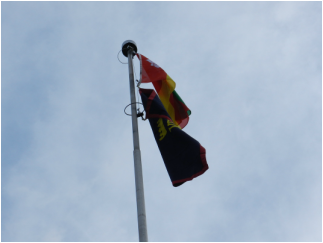
May 5th 2016 8:00am Flag raising in front of town hall

On the morning of 05 May 1945 the 8th Hussars received the following message “ Effective 05 May 1945, 0800 hrs. Cease all operations” For the Hussars WW II was over after 5 long years of military operations. The Hussars would then move into a small town in the Netherlands called Eelde and there they would stay until repatriated to Canada in Jan 1946. Eelde would become a second home to the Regiment.

In 2015 the Regiment, the Town of Sussex and the Town of Eelde (Tynarloo) exchanged flags in preparation of celebrating the 70th Anniversary of this event. On Tuesday 05 May at 0800 hrs the two towns will raise each others flags to mark the event.


Coffee and Muffins at the 8th Hussars Museum 8:15-9:15

Picture
May 5th 2016 9:30am 70th Anniversary of Canadian Dutch Tulip Garden Blooming Ceremony in front of town hall - On May 5th. Communities In Bloom, Mrs Dunfield's Grade 4 class, dignitaries and veterans will return to Town Hall to view the red and white blooming tulips. The tulip bulbs which were provided by Vesey's, planted by Veterans and the children commemorate the 70th anniversary of the Liberation of The Netherlands.

In 2015 The Town of Sussex was honored to have been selected through an application from Communities in Bloom to help celebrate  the 70th anniversary of the Liberation of The Netherlands.
As Canada’s major importer of Dutch Bulbs, Vesey’s recognized that a celebration of the very special 70th anniversary ending WW2 was incredibly important and should not pass by without their involvement.

Since Vesey’s customers are spread across the entire nation, the company wanted to make this a truly Canadian Gift. To accomplish this goal, they made available 140 tulip gardens, each containing 700 red & white tulips, to various communities across Canada.

The planting ceremony on November 5
th 2015 included representatives of school children, Mrs. Dunfield and her Grade 4 class, MLA Bruce Northrup, Graham Milnar, representing the Town, Members of the 8th Hussars Museum including Borden McLellan and Scovil Brown, Veterans of the Sussex Royal Canadian Legion, Members of the CIB committee to help plant and make this a very special occasion.


Picture
May 5th 2016 10:00am 8th Hussars Museum Spring Opening

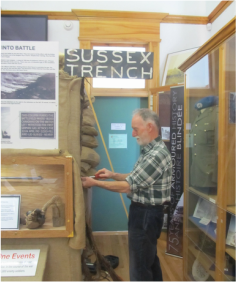
The Museum will be commemorating the First World War, through our trench display the great battles at Mount Sorrel and the Somme in which members of the Hussars took part and we are opening a new display on Peacekeeping. 

Mrs. Dunfield and her Grade 4 class will be returning for the Blooming Ceremony at Town Hall and  the 8th Hussars Museum Spring Opening .

All events are are Open to the Public - Mark Your Calendar in Advance May 5th 2016


2 Comments

Faces to Graves Foundation

4/6/2016

6 Comments

 
6 Comments

Visit from 8th Canadian Hussars

3/15/2016

3 Comments

 
Picture
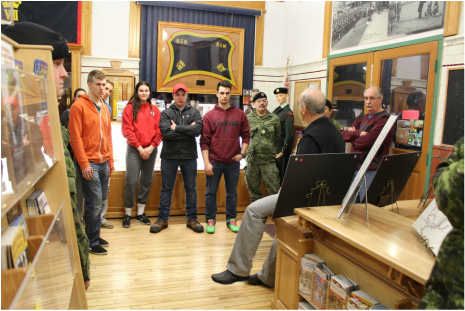
We had a group of 8th Canadian Hussars (Princess Louises ) NCO’s, instructors and new recruits stop by the 8th Hussars Museum Saturday night March 12th. The focus of the visit was to give the new recruits a history of the 8th Canadian Hussars from 1848 through to present time. We had 4 board members, Scovil Brown, Gary Bowser, Carol Carr and Tom McLaughlan, walk them through various displays representing key points in the Regimental History. They were also given a tour of the museum office and show how we archive documents and establish records and preserve artifacts.

3 Comments

Hugh Leonard McHugh

3/5/2016

32 Comments


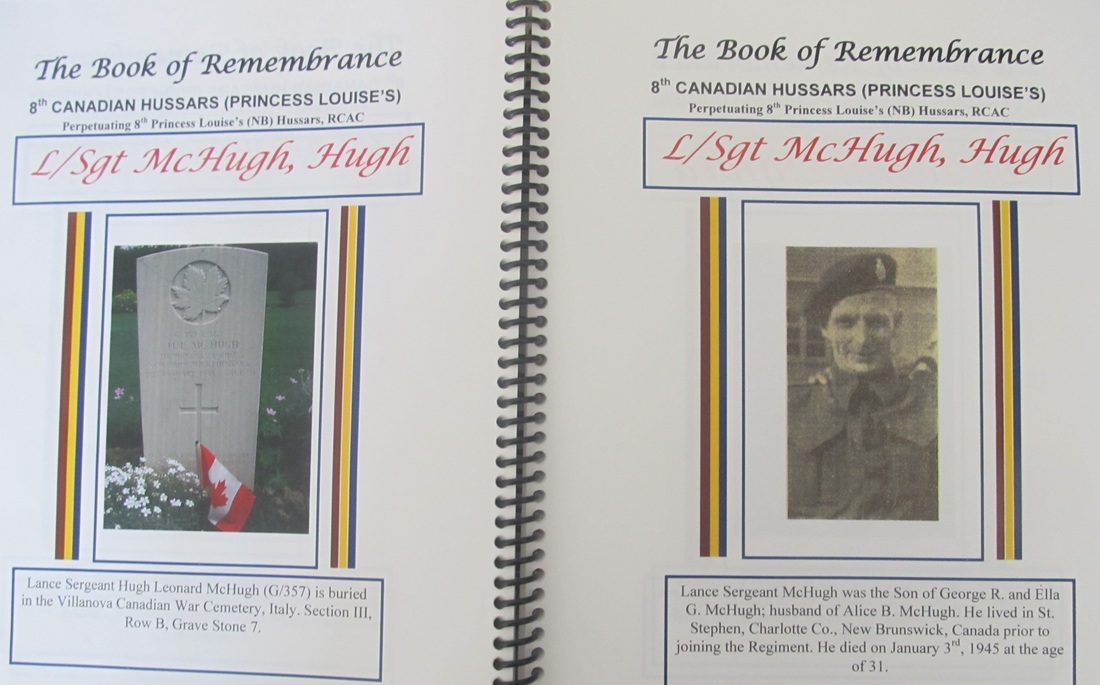
Hugh Leonard McHugh - A Canadian Soldier


      Lance Sergeant McHugh was the son of George R. and Ella G. McHugh ,husband of Alice B. McHugh. He lived in St George, Charlotte Co., New Brunswick Canada prior to joining the Regiment.
     Hugh quit school at the age of 15 and went to work as a chocolate maker at the Ganong Brothers    Chocolate Factory in St Stephen for 4 years. He enlisted on August 6th ,1940 in Sussex New Brunswick. He trained in Camp Borden Ontario and was granted his class 3 motor transport drivers license.
   Hugh then travelled to England where he took driving instruction and completed an anti-aircraft course. He continued training for two years , and served in Italy. He died on January 3rd, 1945 at the age of 31. Lest We Forget.


Click the above video to get Hugh's full story.
Picture
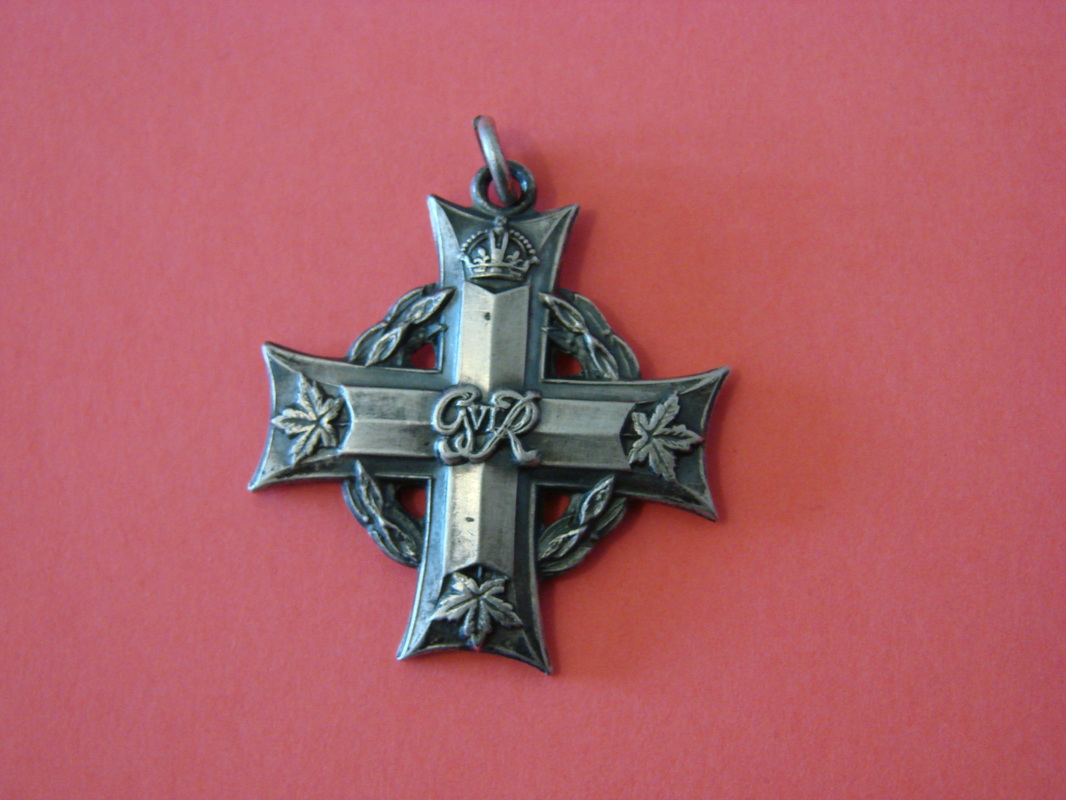
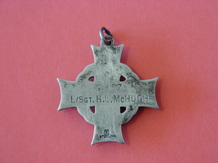
The 8th Hussar Museum, Sussex New Brunswick has received the Silver Cross that would have been given to a next of Kin of Hugh McHugh's after his death. The silver cross is awarded to mothers and widows (next of kin) of Canadian soldiers who died on active duty or whose death was consequently attributed to such duty.

Picture
The silver cross, an award that has been granted as a mememto of personal loss and sacrifice on the part of widows and mothers of Canadian soldiers, sailers, and airmen who died for their Country during war.
Picture
Lance Sergeant Hugh Leonard McHugh (G/357) is buried in the Villanova Canadian War Cemetery, Italy. Section III, Row B, Grave Stone 7.
Thanks to Belleisle Regional High School Program
Lest We Forget Videos
32 Comments

8th Hussar Curling Bonspiel

3/2/2016

4 Comments


8th Hussar Curling Bonspiel

Picture
 Thanks to Whitey (Burton) White, Nick (Bill) Nickson and Con (Connell ) Keith, the local Hussars had a great day of curling at the Sussex Golf and Curling Club on Sat 27 Feb 16. Ten teams with former members from as far away as NS attended and some nifty prizes were handed out. This event has been run locally for the last few years and it is well worth attending.
 

To close out the day, a great meal was prepared thanks to Denise and Don Korth, and it included BBQ steak, baked potatoes, salad and all the fixings. And yes the bar was open so a good time was had by all.
Photos were taken by Roderick Belliveau .


4 Comments

Valentine

2/14/2016

10 Comments

 
  A Son’s Special Valentine


Picture

Communication today is almost instant with technology, you can chat with anyone around the world anytime you wish through texting, skype, instant messenger,facetiming and the list goes on. In the early years before this technology communication was through mail or telegram only if you happen to have the availability.  Weeks could pass without communication.

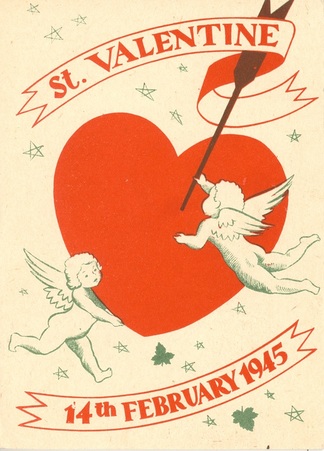
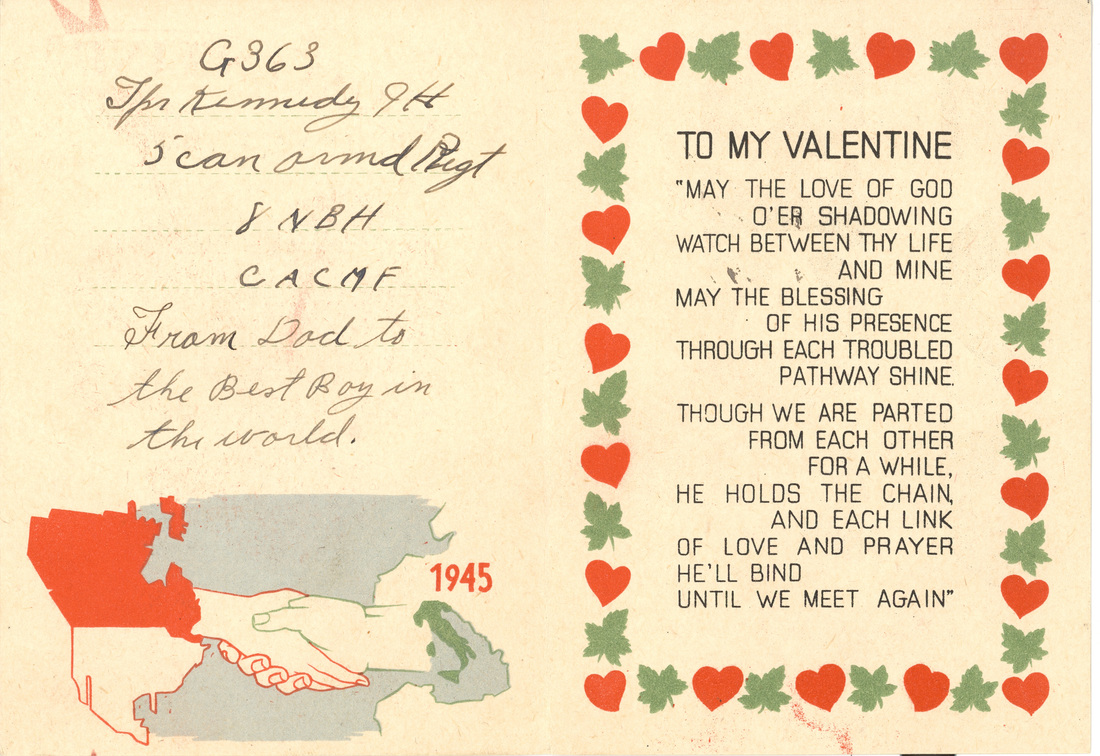
But for one 10 year old boy, one tiny piece of communication, a Valentines card from his dad in 1945 while he was in Europe during World War 2 becomes a treasure with a life time memory between a dad and son.

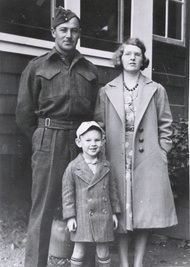
Pictured to the left is Issac (Allen) Kennedy, the little boy , who now lives near Fredericton and is a retired military officer. Issac stands with his mother Mary and father Trooper Issac Harry Kennedy of the 8th Princess Louise's (New Brunswick) Hussars ,who sent him a valentines from overseas in 1945.  The 71 year old valentine card is now on display at the 8th Hussars Museum in Sussex New Brunswick.
Issac's full story can be found  at the 8th Hussars Museum.


Picture
Picture
Donated by LCol (Ret) IA Kennedy in memory of his father, G363 Tpr IH Kennedy, 8NBHPL. A cherished Valentine from Tpr Kennedy to his son, Allen in St Stephen, NB.
We have a display at the 8th Hussars Museum which is called "Letters Home"
Beside this display is a copy of a newspaper article written by the King's County Record of and interview with Allen Kennedy.


10 Comments
<<Previous
Forward>>

    Welcome to the 8th Hussars Museum
     The 8th Hussars Museum is located in the historic Train Station in Sussex, NB. The building has been restored to its original grandeur and is situated in the hub of the Town of Sussex. The Victorian-era structure houses many of the important artifacts of the museum and is accessible to the general public. Since the later part of the 19th century, countless Hussars arrived by rail to train at Camp Sussex and later to serve in the South African War, WWI and WWII.
    The collection includes many items representing the life of the Regiment with original uniforms dating back to 1881, original Routine Orders dating back to 1893, memorabilia from members who represented the Regiment at Queen Victoria's Diamond Jubilee, WWI, WWII, UN/NATO peacekeeping tours as well as the Afghanistan engagement. Of particular interest are the flags from each of these eras. The Museum also proudly holds the original accouterments of HRH The Princess Royal who is Colonel Commandant of the Regiment.

    Archives

    August 2021
    April 2021
    March 2021
    February 2021
    January 2021
    December 2020
    November 2020
    October 2020
    April 2020
    February 2020
    December 2019
    November 2019
    October 2019
    June 2019
    May 2019
    March 2019
    January 2019
    November 2018
    October 2018
    August 2018
    June 2018
    May 2018
    March 2018
    October 2017
    August 2017
    July 2017
    June 2017
    April 2017
    March 2017
    February 2017
    December 2016
    November 2016
    July 2016
    June 2016
    May 2016
    April 2016
    March 2016
    February 2016
    January 2016
    December 2015
    November 2015
    October 2015

Location

Museum Google Reviews

"A lot of love, care, and respect went into the creation of this space. Thank you for a great tour and a fabulous tribute to so many."

"Friendly and informative- an important keeper of Canadian history"

Contact Us

​We're also on Instagram! @8thHussarsMuseum

We respectfully acknowledge that New Brunswick is situated on the unceded and unsurrendered territories of the Wolastoqey, Mi'gmaw, and Peskotomuhkati peoples. We seek to repair and rebuild meaningful relationships with Indigenous peoples and honour these lands which hold the hopes of future generations.
Proudly powered by Weebly